Car Reviews
The 10,000 KM Milestone: A Real-World Reality Check
When you first drive a new Maruti Swift off the showroom floor, the excitement is palpable. The steering is light, the seats…
Read full story →5 min read
When you first drive a new Maruti Swift off the showroom floor, the excitement is palpable. The steering is light, the seats are pristine, and that digital display feels like the height of modern tech. But the true character of a car doesn’t reveal itself during a 15-minute test drive with a salesperson sitting next to you. It reveals itself after the first 10,000 kilometers—after the first monsoon, the countless highway sprints, and the grueling daily commutes through bumper-to-bumper traffic.
Having lived with the new Z-Series Swift for exactly 10,003 kilometers, I can finally cut through the marketing fluff. If you are looking to buy one or are simply wondering how the new three-cylinder engine holds up over time, here is the unvarnished truth.
The biggest talking point of this generation is the shift from the legendary four-cylinder K-Series engine to the new Z-Series three-cylinder mill. Critics were worried about “thrum” and “vibration.”
After 10,000 km, here is the verdict: At idle, you can feel a slight tremor in the gear lever that wasn’t there in the old car. However, once you’re moving, that “thrum” turns into a sporty growl that is actually quite characterful. The engine has “loosened up” significantly since the 1,000 km mark. It feels peppier now, and the low-end torque is genuinely impressive. In city traffic, you can crawl in third gear at 20 km/h without the engine knocking—something the old Swift struggled with.
On the highway, the story is different. If you’re cruising at 90 km/h, it’s a silent, fuel-sipping machine. But if you need to overtake a long trailer on a two-lane road, you will miss that fourth cylinder. You have to plan your moves, downshift, and let the engine rev. It’s a “momentum car” now, not a “point-and-shoot” car.
Maruti Suzuki and fuel efficiency are synonymous, but the Z-Series takes it to a new level. I’ve tracked every tankful using a fuel-logging app, and the results are staggering for a non-hybrid petrol car.
| Driving Scenario | Fuel Efficiency Recorded |
| Peak Hour City Traffic (AC on) | 15.2 km/l |
| Light City Traffic / Suburbs | 18.4 km/l |
| Highway (Steady 80-90 km/h) | 24.8 km/l |
| Aggressive Highway Driving | 19.5 km/l |
The average over 10,000 km settled at 19.2 km/l. For a car that gets driven daily without any particular attempt at hypermiling, these figures are the best in the segment. If your primary goal is to keep your monthly fuel bills low, look no further.
The interior of a Swift is a functional space, but after 10,000 km, some “Maruti-isms” are starting to show. The dashboard design is modern and driver-centric, which I love, but the plastic quality remains a bit of a letdown. I’ve noticed minor hairline scratches on the door pads and around the power window switches—surfaces that get touched every day.
The seats, however, are a highlight. They haven’t lost their shape or firmness. The fabric is durable and handles spills (yes, a coffee incident occurred at 4,000 km) surprisingly well with a simple foam cleaner.
The 9-inch SmartPlay Pro+ infotainment system is another win. Most budget cars start to lag or freeze after a few months of cache buildup. This unit remains as snappy as day one. Wireless Apple CarPlay connects before I’ve even buckled my seatbelt, which is a convenience I now can’t live without.
“Marutis start rattling after 5,000 km.” We’ve all heard it. I’m happy to report that at 10,000 km, my Swift is still silent. No squeaks from the dashboard, no rattling from the parcel tray. It seems the new platform has better structural rigidity.
The ride quality is on the firmer side. If you drive over sharp potholes, you will hear a “thud” and feel it in your spine. However, this firmness is what makes the Swift fun. It doesn’t lean excessively in corners, and the steering feels connected. It’s a car that encourages you to take the long way home if there are some curves involved.
Maintenance is where the Swift shines. The 10,000 km service is typically the third free service (where labor is free, but parts are not).
The Bill Breakdown:
Spending less than ₹3,000 for a 10,000 km check-up is remarkable. The service network is so vast that I found a certified workshop even during a road trip to a remote hill station, which provides a level of peace of mind that no other brand in India can match.
After 10,000 kilometers, the Maruti Swift has proven to be a mature, sensible, yet slightly cheeky companion. It has evolved from a “boy racer” car into a “smart professional’s” car.
Buy it if: You want class-leading mileage, incredible resale value, and a car that is effortless to park and drive in the city. The addition of 6 airbags as standard finally makes it a recommendation I can make without a safety “asterisk.”
Skip it if: You do 100% of your driving on the highway with four passengers and a full trunk. In that specific scenario, the three-cylinder engine feels overworked, and you might be better off looking at a larger sedan or a turbo-charged rival.
The Swift isn’t perfect, but it is honest. It promises low running costs and reliability, and after 10,000 km, it has delivered on those promises 100%.
There is a specific moment in every motorcyclist’s journey. It’s that moment when you decide you want something more than just a point-A-to-point-B commuter machine. You want adrenaline. You want style. You want a bike that makes you look back at it every time you park it.
For over a decade, for thousands of riders across the globe, the answer to that craving has been one specific machine: The KTM 200 Duke.
If you are looking for your first “proper” performance motorcycle, or just an incredibly fun urban weapon, the 200 Duke is likely on your shortlist. But in a market flooded with options, does the original naked streetfighter still hold up?
Let’s twist the throttle and find out.
Let’s be honest, the first thing that draws you to a KTM is the way it looks. The 200 Duke doesn’t do “subtle.”
Even standing still, it looks fast. Borrowing heavy design cues from its bigger sibling, the 1290 Super Duke R, the 200cc version is sharp, angular, and unapologetically aggressive.
The signature exposed trellis frame, the sharp fuel tank extensions, and that distinct headlight assembly scream “streetfighter.” It doesn’t look like a beginner bike; it looks like a premium machine that means business. Whether you choose the iconic orange or the stealthier black/white options, you are guaranteed to turn heads at every stoplight.
This is where the magic happens. Don’t let the “200cc” displacement fool you. This isn’t a lazy cruiser engine.
The KTM 200 Duke is powered by a liquid-cooled, single-cylinder engine that is an absolute firecracker. It’s famous for its “rev-happy” nature. It doesn’t just accelerate; it surges.
Down low in the RPM range, it’s manageable for city traffic. But once you cross that 6,000-7,000 RPM mark, the bike wakes up with a glorious, urgent rush of power right up to the redline. It’s an addictive feeling that turns mundane city commutes into a video game.
With around 25 horsepower on tap in a lightweight chassis, the power-to-weight ratio is phenomenal for this class. It’s quick enough to beat almost anything off the line in city traffic and has enough lungs for highway blasts.
If the engine is the heart of the Duke, the chassis is its soul.
KTM’s tagline is “Ready to Race,” and you feel that heritage in the corners. The bike is incredibly light and nimble. It flicks into corners with almost telepathic ease. You just look where you want to go, and the bike is already there.
Thanks to premium WP suspension components (upside-down forks up front and a monoshock at the rear), the ride is sporty and planted. It gives you tremendous confidence, inviting you to lean a little further in every bend.
A word of warning though: that sporty suspension means the ride can feel a bit stiff on bad roads, and the seat is definitely designed for active riding rather than long-distance touring comfort.
While it may not have the fancy TFT screens of the newest 390 Duke, the 200 keeps things functional and focused.
The 200 Duke occupies a perfect sweet spot in the motorcycle world.
It is the ideal motorcycle for the rider wanting to step up from a basic 125cc or 150cc commuter. It has enough power to thrill you without being intimidatingly fast like a 600cc sportbike. It teaches you throttle control, body positioning in corners, and how to manage braking dynamics.
It’s also fantastic for experienced riders who want a second bike just for hooliganism in the city without wrestling a heavy machine in traffic.
Here is a quick breakdown of the pros and cons:
| Pros | Cons |
| Thrilling Engine: Punchy acceleration that loves to rev. | Stiff Ride: You will feel the bumps on bad roads. |
| Sharp Handling: Incredible agility in corners and traffic. | Engine Heat: The high-performance engine can get warm in bumper-to-bumper traffic. |
| Premium Looks: Looks much bigger and more expensive than it is. | Hard Seat: Not ideal for all-day touring comfort. |
| Safety Tech: Dual-Channel ABS is a great inclusion. |
The KTM 200 Duke isn’t just a motorcycle; it’s an experience. It brings a level of excitement to the sub-250cc class that very few competitors can match.
It might be a little raw, it might be a little loud, and it might vibrate a bit when you push it to the absolute limit—but that’s exactly why people love it. It has character.
If you are looking for a sensible, quiet, soft commuter, look elsewhere. But if you want every ride to put a massive grin inside your helmet, the orange pocket rocket is still the king of the streets.
Let’s talk money. The 200 Duke is a premium machine, and the price reflects that. It is no longer the budget bike it was when it launched in 2012, but it still offers solid value for the performance you get.
As of early 2026, the Ex-showroom price hovers around ₹1.96 Lakh – ₹1.98 Lakh.
However, the real number you need to worry about is the On-Road Price, which includes RTO registration, 5-year insurance, and other taxes. This varies by state, but here is a realistic estimate for major cities:
> Pro Tip: Always negotiate on the “handling charges” and insurance at the dealership. You can often save ₹3,000–₹5,000 just by comparing insurance quotes online!
Here are the most common questions riders ask before buying the orange beast.
1. What is the real-world mileage of the KTM 200 Duke? Don’t expect commuter-level efficiency here. In the city, if you ride aggressively (which the bike encourages you to do), expect 30–35 kmpl. On the highway, if you cruise at a steady 80-90 kmph, you can squeeze out 38–40 kmpl.
2. Is the KTM 200 Duke good for short riders? The current generation 200 Duke has a seat height of 822mm, which is on the taller side.
3. Does the engine heat up in traffic? Yes. It is a high-compression, liquid-cooled engine. If you are stuck in bumper-to-bumper traffic for 20 minutes in the summer, you will feel the heat on your legs. The radiator fan kicks in loudly to cool it down. It’s normal for high-performance engines, but it can get annoying in Indian summers.
4. What is the top speed of the KTM 200 Duke? The bike can comfortably hit 135 kmph. If you tuck in and find a long empty stretch of road, you might see 142 kmph on the speedometer. However, the bike feels most alive and stable between 80 kmph and 110 kmph.
5. Is it expensive to maintain? KTM service is generally more expensive than brands like Bajaj or TVS, but cheaper than Japanese giants like Yamaha or Suzuki for spare parts.
6. Is it good for long-distance touring? You can tour on it, but your bum might complain. The seat is hard, and the lack of a windscreen means the wind blast hits you hard at high speeds. For weekend trips (200-300 km), it’s a blast. for cross-country rides, you might want to invest in a gel seat and a windshield.
In India, the word “scooter” is almost synonymous with “Activa.” For decades, Honda has dominated the commuter segment with its reliable workhorse. But as urban commuters started demanding more power, better features, and a premium feel, the 110cc engine just wasn’t enough for everyone.
Enter the Honda Activa 125.
It promises the legendary reliability of the Activa badge but with added punch, smarter technology, and a more sophisticated ride. But in a fiercely competitive 125cc segment—rivaled by the peppy Suzuki Access and the practical TVS Jupiter 125—does the Activa 125 still hold the crown?
We took the Honda Activa 125 for a spin in real-world city conditions to evaluate its mileage, performance, and comfort to help you decide if it’s the right upgrade for your daily commute.
Before we dive deep, here are the numbers that matter.
| Feature | Specification |
| Engine Type | 124cc, Fan Cooled, 4 Stroke, SI Engine |
| Max Power | 8.30 PS @ 6250 rpm |
| Max Torque | 10.4 Nm @ 5000 rpm |
| Fuel System | PGM-Fi (Fuel Injection) |
| Front Suspension | Telescopic |
| Brakes | Disc (optional Front), Drum (Rear) with CBS |
| Kerb Weight | 109 kg |
| Fuel Tank Capacity | 5.3 Litres |
The Activa 125 doesn’t scream for attention, and that’s by design. It retains the familiar, universally acceptable silhouette of the Activa family but adds enough premium touches to distinguish it from its younger 110cc sibling.
The front apron features a distinct LED headlamp and signature LED position lamps that give it a sharp, modern look. Honda has used chrome accents generously on the front and side panels, appealing to buyers who want a scooter that looks a bit upmarket.
Build Quality: As expected from Honda, fit and finish are excellent. The switchgear feels tactile, the panel gaps are consistent, and the overall feeling is one of sturdiness. It feels built to last on tough city roads.
The heart of the matter is the 124cc, fuel-injected (PGM-Fi) engine. If one word could describe this engine, it’s refinement.
Unlike some of its sportier rivals, the Activa 125 isn’t about sudden bursts of acceleration. Instead, it offers a wonderfully linear and smooth power delivery. It picks up speed gracefully, making it incredibly easy to manage in bumper-to-bumper traffic.
It cruises comfortably between 60-70 km/h without feeling stressed. While it can push past 85 km/h, it’s happiest in the mid-range, which is exactly where city commuters spend 90% of their time. The engine remains practically vibration-free throughout the rev range, significantly reducing rider fatigue on longer commutes.
The biggest question for any Indian commuter: “Kitna deti hai?” (How much mileage does it give?).
Honda has equipped the Activa 125 with lots of tech to squeeze out every drop of fuel, including friction reduction technology in the engine.
In our mixed testing conditions (60% heavy city traffic, 40% open roads), the Honda Activa 125 delivered an impressive real-world mileage of approximately 46-50 kmpl.
Pro Tip: Your mileage will vary based on your riding style. Utilizing the ‘Eco’ indicator on the dashboard and avoiding sudden acceleration helps achieve the higher end of that range.
This is where the Activa 125 really justifies its premium price tag over the standard model. Honda has packed in practical features that make daily life easier.
Gone is the painful cranking noise of older scooters. The ACG starter ensures the engine comes to life silently and instantly. It’s a small feature that feels very premium every time you use it.
This is a boon for traffic signals. If you stop for more than 3 seconds, the engine cuts off automatically to save fuel. A slight twist of the throttle restarts it instantly. It works seamlessly and contributes to that great mileage figure.
The console is informative, offering a mix of analog speedometer and digital readouts for fuel gauge, odometer, trip meter, clock, and crucially, real-time mileage and distance-to-empty.
The Activa 125 uses telescopic forks upfront and a 3-step adjustable spring-loaded hydraulic suspension at the rear.
The ride quality is tuned for comfort. It absorbs minor bumps and undulations on city roads very well. The seat is long, wide, and well-cushioned, making it comfortable for both rider and pillion on commutes lasting over an hour.
The handling is neutral and predictable. It’s not a corner-carving machine, but it feels stable at speeds and is agile enough to filter through tight traffic gaps. The optional front disc brake provides strong, progressive stopping power, aided by the Combi-Brake System (CBS).
The Honda Activa 125 is not the fastest scooter in its segment, nor does it have the biggest under-seat storage.
However, it is arguably the most balanced and stress-free scooter you can buy. It takes the core strengths of the Activa brand—unbulletproof reliability and low maintenance—and wraps them in a smoother, smarter, and more premium package.
You should buy the Honda Activa 125 if:
It remains the sensible, mature choice in the premium commuter segment. It’s a scooter that just works, and works brilliantly, day in and day out.
Pros and Cons Summary
| Pros | Cons |
| ✅ Incredibly smooth and refined engine | ❌ Slightly pricier than competitors |
| ✅ Excellent real-world mileage | ❌ Under-seat storage could be larger (won’t fit a full-face helmet) |
| ✅ Practical features (External fuel lid, Silent Start) | ❌ Design feels a bit conservative/dated to some |
| ✅ Comfortable ride quality | ❌ Missing features like Bluetooth connectivity (available in rivals) |
| ✅ Honda’s widespread service network |
Q: What is the on-road price of the Honda Activa 125? A: The on-road price varies depending on your city and the variant chosen (Drum, Drum Alloy, or Disc). It generally ranges between ₹95,000 to ₹1.10 Lakh (approximate figures for 2023-24). Please check with your local dealer for exact pricing.
Q: Is the Activa 125 good for long rides? A: While it is designed primarily for city commuting, the comfortable seat and refined engine make it capable of occasional 50-70 km highway runs without overheating or stressing the rider.
Q: Which is better, Activa 6G or Activa 125? A: If you are on a tight budget and only need basic city transport, the Activa 6G (110cc) is sufficient. If you want better pick-up (especially with a pillion), more features, and a premium feel, the Activa 125 is worth the extra cost.
Q: What is the fuel tank capacity of Activa 125? A: It has a fuel tank capacity of 5.3 Litres.
Disclaimer: The mileage figures mentioned are based on our test conditions. Actual mileage may vary depending on riding habits, road conditions, and vehicle maintenance.
In the crowded 150cc segment in India, few names carry the weight of the Yamaha FZ. For over a decade, it has defined what a muscular street commuter should look like. Now, in its fourth generation—the Yamaha FZS V4 Deluxe—it’s not just relying on its good looks.
Yamaha has injected serious technology into this package, most notably adding a Traction Control System (TCS), a feature unheard of in this displacement category just a few years ago.
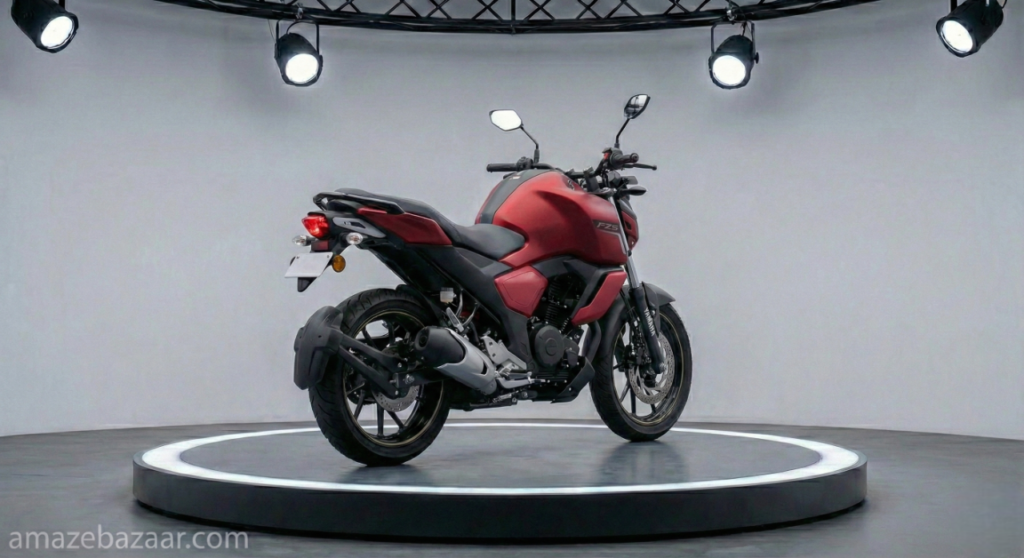
We got an up-close look at the stunning Matte Red variant, and it demands attention. In this review, we break down the design, the new tech features, performance, and whether this bike is the right choice for your daily commute.
Let’s talk about the elephant in the room—or rather, the red bull on the streets. The design language of the FZS V4 remains familiar, retaining that signature muscular fuel tank and aggressive stance that defines the “streetfighter” look.
However, the Matte Red paint scheme, as seen in these studio shots, elevates the bike’s premium feel significantly. Unlike glossy finishes that can sometimes look toy-ish, the matte finish absorbs light beautifully, highlighting the sharp creases on the tank extensions and the side panels.
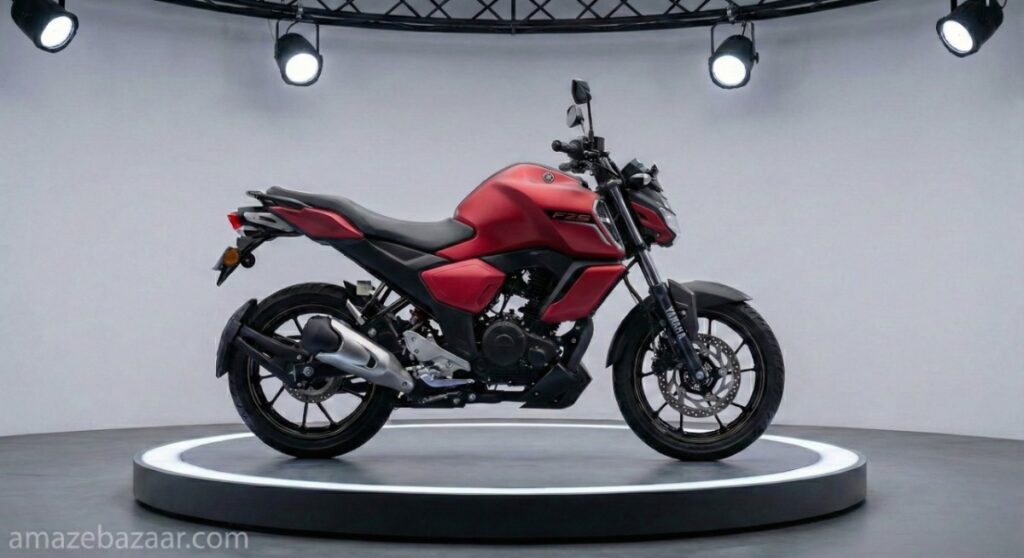
The front fascia features the updated LED headlight with distinct DRLs (Daytime Running Lights), which gives it a modern, robotic face. The gold-colored rims on some variants have been replaced with sleek black alloys here, which complement the red bodywork perfectly. The chunky rear tire—a staple of the FZ identity—remains, ensuring the bike looks much bigger than its 149cc engine suggests.
This is where the Yamaha FZS V4 truly distinguishes itself from its predecessors and many rivals.
This is the headline feature. In a country known for unpredictable road surfaces—sand, gravel, and wet patches—TCS is a massive safety bonus. It detects rear-wheel slip during acceleration and cuts power momentarily to regain grip. For new riders, this is a game-changer.
The fully digital LCD instrument cluster now pairs with your smartphone via the Yamaha Y-Connect app. It’s not a full turn-by-turn navigation system, but it offers crucial notifications:
At its heart, the FZS V4 retains the tried-and-tested 149cc, single-cylinder, air-cooled, SOHC engine. It is now fully compliant with the strictest BS6 Phase 2 emissions norms and E20 fuel ready.
The Ride Experience: Don’t let the aggressive looks fool you; this is not a track machine. It is, however, an exceptional urban commuter. The engine is incredibly refined and buttery smooth. The torque is concentrated in the low-to-mid range, making city overtakes and filtering through traffic effortless without needing constant gear shifts.
The suspension setup (telescopic front forks and a rear monoshock) is tuned slightly towards the firmer side but absorbs city bumps competently. The riding posture is upright and comfortable, perfect for daily office runs or college commutes.
For the target demographic of the FZS V4, mileage is paramount. Thanks to Yamaha’s “Blue Core” technology and fuel injection, the bike is surprisingly frugal.
While ARAI figures are higher, you can realistically expect real-world mileage between 45 km/l to 50 km/l in mixed city and highway riding conditions, provided you aren’t constantly redlining the engine.
Pros and Cons at a Glance
| Pros | Cons |
| Looks: The Matte Red finish is premium and head-turning. | Top-End Power: Feels breathless on open highways above 90 km/h. |
| Safety Tech: First-in-segment Traction Control System. | Headlight Intensity: The LED throw could be better for unlit highways. |
| Refinement: Extremely smooth and reliable engine. | Price: Slightly expensive compared to some powerful rivals like the Pulsar N160. |
| Handling: Wide tires offer great stability in corners. |
The Yamaha FZS V4 Deluxe in Matte Red is a compelling package. It is not the fastest bike in its segment, nor is it the cheapest.
However, it strikes a brilliant balance for the modern urban rider. It offers the reliability of Yamaha engineering, the safety net of Traction Control, modern Bluetooth features, and looks that still turn heads years after the original FZ launched.
If you prioritize style, comfort, fuel efficiency, and safety tech over outright top speed, the FZS V4 is arguably the most sensible and stylish choice in the 150cc market today.
Q: What is the on-road price of the Yamaha FZS V4? A: The price varies by state due to taxes, but expect the on-road price to be approximately ₹1.45 Lakh to ₹1.55 Lakh (as of early 2024).
Q: Does the FZS V4 have dual-channel ABS? A: No, the FZS V4 comes with single-channel ABS (front wheel only) but compensates with the addition of Traction Control.
Q: Is the Matte Red color difficult to maintain? A: Matte finishes require specific cleaning products that don’t contain wax or gloss agents. While they look gre
Note on the Model Name: Based on current Yamaha naming conventions and Indian market trends, the term “Yamaha R1 V5” is popularly used by fans to describe the upcoming Yamaha R15 V5 (often called the “Baby R1” due to its design). The actual Yamaha R1 is a 1000cc superbike that does not use “V” versioning. Given your interest in the R15 series, this post focuses on the highly anticipated Yamaha R15 V5, while clarifying the R1 connection.
If there is one motorcycle that has single-handedly defined the “sports bike” culture in India for the last decade and a half, it is the Yamaha R-series. From college campuses in West Bengal to the highways of Bangalore, the R15 has been the dream machine for millions. Now, the whispers in the automotive world are getting louder. The rumors are flying. The Yamaha R15 V5—often searched for as the Yamaha R1 V5 due to its striking resemblance to its liter-class big brother—is on the horizon.
For a young professional or a fresher in the job market, a bike isn’t just a mode of transport; it’s a statement. It’s about freedom, style, and the thrill of the ride. The current R15 V4 is already a masterpiece, but the V5 promises to take the “R-DNA” to a whole new level.
In this detailed guide, we are going to break down everything we know and expect about the Yamaha R15 V5. We’ll cover the Indian on-road price, the “Baby R1” design philosophy, the engine specs that punch above their weight, and why this might just be the best bike to save your salary for in 2026.
Before we dive into the nuts and bolts, let’s address the elephant in the room. You might see people searching for the “Yamaha R1 V5.”
Here is the deal:
However, because Yamaha designs the R15 to look almost exactly like the R1, fans affectionately call the upcoming R15 V5 the “Baby R1” or confuse the names. For the purpose of this blog post, we are focusing on the R15 V5, the machine that brings superbike looks to the Indian streets at an affordable price point.
To understand the hype behind the V5, we have to look at where it came from. Yamaha didn’t just build a bike; they built a legacy.
Launched way back in 2008, this was the bike that taught Indians what “cornering” meant. It was liquid-cooled, had a Deltabox frame, and looked like nothing else on the road.
The V2 brought the aggressive split-seat design that young riders loved. It was uncomfortable for the pillion, but nobody cared because it looked so good.
This was the game-changer. It introduced the 155cc engine with VVA (Variable Valve Actuation), pushing the power to nearly 19 BHP. It became the segment leader instantly.
The current generation (V4) brought premium features like USD (Upside Down) forks, Traction Control, and a Quick Shifter, making it the most advanced 150cc bike in India.
So, what is left for the V5? Perfection. The V5 is expected to refine the rough edges of the V4, add more “big bike” features, and adopt the latest global design language of the 2025 Yamaha R1.
The biggest selling point of this motorcycle has always been its looks. The Yamaha R15 V5 is expected to be the most aerodynamic and aggressive version yet.
Leaks and renders suggest a reworked front end. While the V4 already has the bi-functional LED projector headlight (inspired by the R7), the V5 might adopt the new R1-style DRLs (Daytime Running Lights) that look sharper and more menacing. There are rumors of integrated winglets—not just for show, but for actual aerodynamic stability at high speeds, mimicking the MotoGP M1 machine.
Yamaha is likely to ditch the current LCD setup for a full-color TFT display across all variants, not just the “M” version. This screen will likely be brighter, with better contrast for sunny Indian days, and feature a redesigned interface that mimics the superbike telemetry.
Expect a slightly bulkier fuel tank design to give it a “big bike” feel between the knees. The tail section is expected to remain sharp with an aerodynamic tunnel design. The paint schemes will almost certainly include the iconic Yamaha Racing Blue, a Midnight Black, and perhaps a new White/Red anniversary edition theme.
Under the fairing, the Yamaha R15 V5 will retain the gem of an engine that enthusiasts swear by, but with crucial refinements.
While these numbers look similar to the V4, the V5 is expected to have a smoother ECU map. This means better throttle response and potentially a slightly higher top speed, pushing past the 145 km/h mark more effortlessly.
It will feature the slick 6-speed gearbox with an Assist and Slipper Clutch.
This is where the R15 V5 will distinguish itself from the V4. In 2025/2026, riders demand technology that connects with their digital lives.
The V4 has a quick shifter (upshift only) on select variants. The V5 might standardize this feature or, if we are lucky, introduce a bi-directional quick shifter (up and down) on the top-spec “M” variant, which would be a segment-first.
The new display won’t just show speed. Expect:
It has been a long-standing complaint that a premium bike like the R15 still comes with halogen indicators. The V5 will almost certainly fix this with sleek LED flashers as standard equipment.
Better quality plastic buttons and perhaps backlit switchgear for night riding.
The R15 is not a commuter; it is a corner carver.
The legendary Deltabox frame provides rigidity that is unmatched in this class. It gives the rider immense confidence to lean the bike into corners.
Safety is paramount. The V5 will continue with Dual-Channel ABS, meaning both the front and rear wheels are prevented from locking up.
Now, the most critical question: How much will it cost?
Yamaha prices have been creeping up with every version. Given the addition of the TFT screen, potential aesthetic upgrades, and inflation, you can expect a price hike of roughly ₹10,000 to ₹15,000 over the current V4.
| Variant | Estimated Ex-Showroom Price | Estimated On-Road Price (Avg) |
| R15 V5 Metallic Red | ₹ 1,90,000 | ₹ 2,18,000 |
| R15 V5 Dark Knight | ₹ 1,92,000 | ₹ 2,21,000 |
| R15 V5 Racing Blue | ₹ 1,96,000 | ₹ 2,26,000 |
| R15M V5 (Top Spec) | ₹ 2,05,000 | ₹ 2,38,000 |
Note: On-road prices vary by state due to RTO taxes and insurance costs.
For a 155cc bike, ₹2.3 Lakhs sounds expensive. However, you aren’t paying for displacement; you are paying for engineering. There is no other bike in this price range that offers a Deltabox frame, Aluminum swingarm, VVA, Liquid Cooling, and this level of aerodynamic efficiency.
Yamaha India usually refreshes the R15 lineup every 3 to 4 years.
If you are a student or a fresher planning to buy a bike soon, you have a choice: Buy the polished and proven V4 now, or wait roughly 12-18 months for the V5.
If you want heads to turn when you enter the campus, this is it. The aggressive styling commands respect.
If you want to learn the art of knee-down cornering and track riding, the R15 is the perfect “school” bike before you upgrade to a 600cc or 1000cc beast later in your career.
If you appreciate engineering marvels like VVA and Traction Control, this bike will satisfy your mechanical curiosity.
| Feature | Yamaha R15 V5 (Expected) | KTM RC 200 | Suzuki Gixxer SF 250 |
| Engine | 155cc Liquid Cooled | 199cc Liquid Cooled | 249cc Oil Cooled |
| Power | ~19 PS | 25 PS | 26 PS |
| Mileage | ~45-50 kmpl | ~30-35 kmpl | ~35-38 kmpl |
| Tech | TCS, Quickshifter, VVA | Supermoto ABS | Standard ABS |
| Comfort | Aggressive | Aggressive | Balanced/Sport-Touring |
| Price | ~₹2.25 Lakh (On-Road) | ~₹2.50 Lakh (On-Road) | ~₹2.30 Lakh (On-Road) |
Verdict: The KTM is faster, and the Gixxer is more comfortable, but the R15 V5 wins on mileage, technology, and pure handling finesse.
The Yamaha R15 V5 represents the constant evolution of excellence. While some may scoff at the price for a 155cc machine, those who have ridden an R15 know that the spec sheet doesn’t tell the whole story. The connection between the rider’s throttle hand and the rear wheel is something Yamaha has perfected.
For the Indian youth, the R15 V5 will likely be the ultimate “dream bike” for the year 2026. It bridges the gap between a daily commuter and a track weapon. It is frugal enough to run on a student’s pocket money (giving 45+ kmpl) but fast enough to thrill you on a Sunday morning ride.
The “R1 V5” might be a myth, but the R15 V5 is a reality coming soon to a showroom near you.
Q1: Is the Yamaha R1 V5 a 1000cc bike? No. The term “R1 V5” is often used mistakenly for the Yamaha R15 V5. The actual Yamaha R1 is a 1000cc superbike that costs over ₹20 Lakhs.
Q2: What is the mileage of the Yamaha R15 V5? You can expect a real-world mileage of 45 to 50 kmpl in mixed riding conditions, thanks to the VVA technology.
Q3: Can I tour on the R15 V5? Yes, but with breaks. The aggressive posture can be tiring for long distances (300km+). However, the engine is capable of cruising at 100-110 km/h all day without overheating.
Q4: Will the R15 V5 have a Quick Shifter? Yes, the top variants (Racing Blue and M variants) are expected to come with a Quick Shifter as standard.
Q5: Is the R15 V5 good for beginners? Yes. While it looks fast, the power delivery is linear and manageable. It is a forgiving bike that teaches you how to ride well.
Disclaimer:
All bike prices, offers, EMI details, and specifications shown on susomoy.com/ are for informational purposes only. Prices may increase or decrease anytime without prior notice due to changes in location, dealership charges, taxes, insurance, RTO fees, availability, or company updates.
susomoy.com/ is not responsible for any price difference, loss, or misunderstanding caused by price changes. The final and accurate price will always be confirmed by the official showroom / dealer / brand website.
We strongly recommend you verify the latest on-road price from your nearest authorized dealer before making any purchase decision.
আপনি কি কখনও কোনো মিটিংয়ে বসে এমন অনুভব করেছেন? আপনার মাথায় একটা দারুণ আইডিয়া আছে, যা শেয়ার করার জন্য আপনি একদম তৈরি। কিন্তু যেই আপনি কথা বলার জন্য মুখ খুললেন, হঠাৎ গলা শুকিয়ে গেল। বুকের ভেতর হৃদপিণ্ডটা এমনভাবে ধড়ফড় করতে শুরু করল যেন খাঁচায় বন্দি কোনো পাখি। কিছুক্ষণ আগে যে শব্দগুলো মাথায় পরিষ্কার ছিল, এখন সেগুলো সব গুলিয়ে যাচ্ছে। আপনি দ্বিধায় পড়লেন। এবং শেষমেশ, আপনি চুপ করে থাকলেন।
যদি এই পরিস্থিতি আপনার পরিচিত মনে হয়, তবে এখনই একটা গুরুত্বপূর্ণ কথা জেনে রাখুন: আপনি একা নন।
সারা বিশ্বের লক্ষ লক্ষ মানুষ এই সমস্যার সম্মুখীন হয়। এটি কেবল ‘পাবলিক স্পিকিং’ বা সবার সামনে কথা বলার ভয় নয়—বরং এটি একটি নির্দিষ্ট ভয়: একটি দ্বিতীয় ভাষায় (বিশেষ করে ইংরেজিতে) কথা বলার ভয়।
আজকের দিনে ইংরেজি ব্যবসা, ভ্রমণ এবং ইন্টারনেটের বৈশ্বিক ভাষা। কিন্তু যাদের মাতৃভাষা ইংরেজি নয়, তাদের কাছে এটি অনেক সময় যোগাযোগের মাধ্যম না হয়ে একটি ‘পরীক্ষা’ বলে মনে হয়—এমন এক পরীক্ষা যেখানে ফেল করার ভয়ে আমরা সবসময় তটস্থ থাকি।
এই ব্লগে আমরা গভীরে গিয়ে দেখব—কেন এমনটা হয়? আমরা শুধু ওপরের লক্ষণগুলো দেখব না; আমরা এর পেছনের মনস্তাত্ত্বিক কারণ, সামাজিক চাপ এবং শারীরিক প্রতিক্রিয়াগুলো বিশ্লেষণ করব। এবং সবচেয়ে গুরুত্বপূর্ণ হলো, আমরা জানব কিভাবে এটি সমাধান করা যায়।

কাউকে যখন জিজ্ঞেস করা হয় কেন তারা নার্ভাস, তারা সাধারণত বলে, “আমার গ্রামার ভুল হওয়ার ভয় আছে” বা “আমার শব্দভাণ্ডার (Vocabulary) যথেষ্ট ভালো নয়।”
যদিও এগুলো সত্যি হতে পারে, কিন্তু এগুলো আসলে হিমশৈলের চূড়া মাত্র। আপনি যদি আপনার মাতৃভাষায় কথা বলার সময় কোনো ভুল করেন, তবে আপনি হয়তো সেটা হেসে উড়িয়ে দেবেন। তাহলে ইংরেজিতে ভুল হলে কেন সেটাকে এত বড় বিপর্যয় মনে হয়?
বিদেশি ভাষার প্রতি ভীতির একটি বৈজ্ঞানিক নাম আছে: জেনোগ্লোসোফোবিয়া (Xenoglossophobia)। তবে সহজ ভাষায় একে বলা যায়: লোকে কী ভাববে, সেই ভয়।
যখন আমরা নিজের মাতৃভাষায় কথা বলি, তখন আমরা সম্পূর্ণ স্বাধীন। আমরা মজা করতে পারি, বুদ্ধিদীপ্ত কথা বলতে পারি, এমনকি রাগও প্রকাশ করতে পারি। কিন্তু যখন আমরা ইংরেজিতে কথা বলি, তখন মনে হয় আমাদের বুদ্ধিমত্তা বা আইকিউ (IQ) কমে গেছে। আমরা শিশুর মতো অনুভব করি। আমাদের মনের গভীর ভাবগুলো প্রকাশ করতে পারি না, তাই বাধ্য হয়ে সহজ শব্দ ব্যবহার করি।
আমরা ভয় পাই যে, আমাদের ইংরেজি শুনে মানুষ আমাদের বুদ্ধিমত্তা বিচার করবে। আমাদের মনে হয়, একটা ছোট্ট ভুল করলেই মানুষ আমাদের অযোগ্য ভাববে।
মনোবিজ্ঞানে ‘স্পটলাইট এফেক্ট’ নামে একটি বিষয় আছে। এর মানে হলো, আমরা মনে করি মানুষ আমাদের দিকে যতটা মনোযোগ দিচ্ছে, বাস্তবে তারা ততটা দিচ্ছে না।
জনসমক্ষে ইংরেজিতে কথা বলার সময় আপনার মনে হয়, সবার নজর আপনার মুখের দিকে। যেন প্রতিটি শ্রোতা একজন কড়া ইংরেজি শিক্ষক, যারা লাল কলম হাতে আপনার ভুল ধরার জন্য বসে আছেন।
বাস্তবতা হলো: বেশিরভাগ মানুষ আপনার গ্রামার শুনছে না। তারা আপনার বার্তা বা মেসেজ শুনতে চাইছে। তারা হয়তো দুপুরের লাঞ্চ বা নিজেদের সমস্যার কথা ভাবছে। তারা আপনাকে বুঝতে চায়, আপনার ভুল ধরতে চায় না।
আমাদের শিক্ষা ব্যবস্থা ছোটবেলা থেকেই শিখিয়েছে যে ভুল করলেই নম্বর কাটা যাবে। আমরা বিশ্বাস করতে শুরু করি যে “ভালো ইংরেজি” মানেই “নিখুঁত ইংরেজি”।
এটি একটি বিষাক্ত মানসিকতা তৈরি করে। আমরা ভাবি, যতক্ষণ না বাক্যটি আমার মাথায় নিখুঁতভাবে সাজানো হচ্ছে, ততক্ষণ আমি মুখ খুলব না। কিন্তু বাস্তবে কথা বলার সময় এটা অসম্ভব। কথা বলা একটা অগোছালো প্রক্রিয়া। এমনকি যাদের মাতৃভাষা ইংরেজি, তারাও কথা বলার সময় তোতলায়, ভুল শব্দ বলে বা বাক্য নতুন করে শুরু করে।
কখনও ভেবে দেখেছেন কেন নার্ভাস হলে হাত কাঁপে বা মাথা শূন্য হয়ে যায়? এটি আপনার দোষ নয়; এটি জীববিজ্ঞানের খেলা।
যখন আপনি ইংরেজিতে কথা বলতে দাঁড়ান এবং ভয় পান, আপনার মস্তিষ্কের ‘অ্যামিগডালা’ (বিপদ সংকেত কেন্দ্র) মনে করে আপনি বিপদে আছেন। বিপদটা বাঘের হতে পারে বা বসের প্রশ্নের—মস্তিষ্ক পার্থক্য বোঝে না।
এর ফলে ‘ফাইট অর ফ্লাইট’ (লড়ো অথবা পালাও) প্রতিক্রিয়া শুরু হয়:
নার্ভাস হলে আপনার শরীর আক্ষরিক অর্থেই সেই অংশ থেকে শক্তি সরিয়ে নেয়, যা ইংরেজি বলার জন্য সবচেয়ে বেশি প্রয়োজন। এজন্যই আপনি সব ভুলে যান বা “ব্ল্যাঙ্ক” হয়ে যান। আপনি শব্দগুলো জানেন, কিন্তু আতঙ্কের মুহূর্তে আপনার মস্তিষ্ক শব্দ মনে করার চেয়ে ‘বেঁচে থাকা’কে বেশি গুরুত্ব দেয়।
রান্না শেখা বা ছবি আঁকা শেখার সময় তো আমরা এত নার্ভাস হই না। তাহলে ইংরেজির ক্ষেত্রে এত ভয় কেন?
আমাদের মতো অনেক দেশে ইংরেজি শুধু একটি ভাষা নয়, এটি আভিজাত্যের প্রতীক। অনর্গল ইংরেজিতে কথা বলাকে উচ্চশিক্ষা, ভালো চাকরি এবং সামাজিক মর্যাদার সাথে গুলিয়ে ফেলা হয়।
ফলে, আমরা যখন ইংরেজিতে কথা বলি, অবচেতনভাবে আমরা আমাদের যোগ্যতা প্রমাণ করার চাপে থাকি। আমরা শুধু কফি অর্ডার করছি না; আমরা প্রমাণ করতে চাইছি যে আমরা এই সমাজে ‘ফিট’।
“আমার উচ্চারণ ভালো না”—এটি খুব সাধারণ একটি অভিযোগ। আমরা হলিউড মুভি বা আমেরিকান সিরিজ দেখে মনে করি ইংরেজি শুধু ওভাবেই বলতে হবে।
সত্যিটা হলো: অ্যাকসেন্ট বা উচ্চারণ হলো সাহসের প্রতীক। এর মানে হলো আপনি আপনার কমফোর্ট জোন থেকে বেরিয়ে নতুন একটি ভাষা শিখেছেন। বিশ্বজুড়ে বিভিন্ন অ্যাকসেন্টে ইংরেজি বলা হয়—ইন্ডিয়ান, ফ্রেঞ্চ, চাইনিজ। আজকের দিনে ইংরেজির লক্ষ্য হলো বোঝানো (Intelligibility), নেটিভদের মতো শোনানো নয়।
তাহলে সমাধান কী? কিভাবে আমরা এই নার্ভাসনেস কাটিয়ে আত্মবিশ্বাসের সাথে কথা বলব?
সবচেয়ে জরুরি হলো আপনার চিন্তাধারা বদলানো।
যখন আপনি পারফর্মেন্সের ওপর ফোকাস করেন, তখন আপনি নিজের দিকে তাকান (আমি কেমন শোনাচ্ছি?)। যখন আপনি কমিউনিকেশনের ওপর ফোকাস করেন, তখন আপনি শ্রোতার দিকে তাকান (তারা কি বুঝতে পারছে?)।
অনিশ্চয়তা থেকে ভয় তৈরি হয়। আপনি যত বেশি প্রস্তুত থাকবেন, নার্ভাসনেস তত কমবে। তবে স্ক্রিপ্ট মুখস্ত করবেন না। মূল পয়েন্টগুলো মনে রাখুন। ছোট ছোট গল্প বা ‘স্মল টক’ (Small Talk) করার জন্য আগে থেকেই প্রস্তুতি নিন।
সাঁতারের বই পড়ে যেমন সাঁতার শেখা যায় না, তেমনি শুধু ভেবে কথা বলার ভয় কাটানো যাবে না। আপনাকে কথা বলতেই হবে। ছোট থেকে শুরু করুন:
নার্ভাস হলে আমরা দ্রুত কথা বলি, যাতে দ্রুত এই পরিস্থিতি থেকে মুক্তি পাওয়া যায়। কিন্তু দ্রুত কথা বললে ভুল বেশি হয় এবং তোতলামি বাড়ে। ইচ্ছে করে ধীরে কথা বলুন। বাক্যের মাঝে থামুন (Pause)। এতে আপনাকে আরও আত্মবিশ্বাসী মনে হবে।
নেটিভ স্পিকাররাও একটানা কথা বলেন না। তারা “Let me see…”, “You know…”, “That’s a good point…”—এরকম ফিলার শব্দ ব্যবহার করেন। এগুলো শিখুন। যখন সঠিক শব্দ মনে আসবে না, তখন এগুলো ব্যবহার করে ৫ সেকেন্ড সময় নিন।
আয়নার সামনে দাঁড়িয়ে ২ মিনিট নিজের সাথে কথা বলুন। নিজের চোখের দিকে তাকান। সোজা হয়ে দাঁড়ান। এটা প্রথমে অদ্ভুত লাগবে, কিন্তু এটি আপনাকে নিজের ইংরেজি বলা চেহারার সাথে অভ্যস্ত করবে।
ইউটিউবে কোনো ভালো বক্তার ভিডিও চালু করুন। তিনি যা বলছেন, তার ঠিক পরপরই আপনিও হুবহু তাই বলুন। তার গতি এবং আবেগ নকল করার চেষ্টা করুন। এটি আপনার মুখের জড়তা কাটাতে সাহায্য করবে।
নিজের ভয়েস রেকর্ড করুন এবং শুনুন। প্রথমবার শুনতে খুব খারাপ লাগবে। কিন্তু হাল ছাড়বেন না। শুনুন কোথায় ভুল হচ্ছে এবং পরের বার শুধরে নিন।
সবার সামনে ইংরেজিতে কথা বলতে ভয় পাওয়া কোনো দুর্বলতা নয়। এর মানে হলো আপনি বিষয়টিকে গুরুত্ব দিচ্ছেন।
কিন্তু এই ভয়কে আপনার বাধা হতে দেবেন না। পৃথিবী আপনার আইডিয়া শুনতে চায়। আপনার অফিস আপনার মতামত জানতে চায়। নিখুঁত হওয়ার জন্য অপেক্ষা করলে সারাজীবন অপেক্ষাই করতে হবে।
আজ থেকেই শুরু করুন। ভুল হোক, গলা কাঁপুক, কিন্তু কথা বলুন।
প্রতিবার যখন আপনি ভয়ের সাথে লড়াই করে মুখ খুলবেন, আপনি আপনার মস্তিষ্ককে নতুন করে শেখাবেন। ধীরে ধীরে এই বিশাল ভয়ের পাহাড়টি একটি ছোট টিলায় পরিণত হবে।
আপনার একটি নিজস্ব কণ্ঠস্বর আছে। ভয়কে সেটি থামিয়ে দিতে দেবেন না।
যদি এই গাইডটি আপনার উপকারে আসে, তবে এটি আপনার সেই বন্ধুর সাথে শেয়ার করুন যে হয়তো কথা বলার ভয় পাচ্ছে। আসুন, আমরা একে অপরের ভুল না ধরে, একে অপরকে সাহায্য করি।
সত্যি করে বলুন তো, যখনই আপনি “অনর্গল ইংরেজি বলা” বা “Fluency”-র কথা ভাবেন, তখন আপনার মাথায় প্রথম কোন ছবিটা আসে?
একটা বোরিং ক্লাসরুম? একজন কড়া শিক্ষক যিনি প্রতিটা গ্রামার ভুলের জন্য বকা দিচ্ছেন? নাকি কোনো নামী কোচিং সেন্টারের মোটা টাকার ফিজ, যারা দাবি করে “৩০ দিনেই ইংরেজিতে কথা বলা শিখুন” (যা আসলে পুরোপুরি সত্যি নয়)?
যদি আপনি শুধুমাত্র টাকার অভাবে বা সময়ের অভাবে কোচিং সেন্টারে ভর্তি হতে না পারেন এবং সেই কারণে ইংরেজি শেখা পিছিয়ে দিচ্ছেন, তবে আপনার জন্য একটা দারুণ সুখবর আছে: আপনার কোচিং সেন্টারের কোনো প্রয়োজন নেই।
বিশ্বের অনেক মানুষ, যারা আজ দুর্দান্ত ইংরেজিতে কথা বলেন, তারা কোনোদিন কোনো কোচিং সেন্টারে পা রাখেননি। তারা ভাষাটি পড়ে শেখেননি, তারা ভাষাটির সাথে বসবাস করে শিখেছেন। মুভি দেখে, ভুল করে এবং নিজের কৌতূহল থেকে তারা শিখেছেন।
এই গাইডে, আমি আপনাকে দেখাবো কীভাবে একদম শূন্য থেকে শুরু করে একজন আত্মবিশ্বাসী স্পিকার হয়ে উঠবেন—তাও সম্পূর্ণ একা। আমরা কথা বলবো ফ্লুয়েন্সির সাইকোলজি, প্রতিদিনের অভ্যাস এবং এমন কিছু ফ্রি টুলের ব্যাপারে যা যেকোনো দামী শিক্ষকের চেয়ে ভালো।
নিজের ভয়েস খুঁজে পেতে প্রস্তুত? চলুন শুরু করি।

কীভাবে কথা বলবেন তা জানার আগে, ইংরেজি নিয়ে আপনার চিন্তাভাবনা বদলাতে হবে।
বেশিরভাগ মানুষ ইংরেজিকে ইতিহাস বা অঙ্কের মতো একটা “সাবজেক্ট” বা বিষয় মনে করেন। তারা নিয়ম মুখস্থ করেন, পরীক্ষা দেন এবং নিখুঁত হওয়ার চেষ্টা করেন। সমস্যা হলো, ভাষা কোনো পড়ার বিষয় নয়; এটি একটি দক্ষতা (Skill)। এটি সাঁতার কাটা বা সাইকেল চালানোর মতো। আপনি জলের সূত্র পড়ে সাঁতার শিখতে পারবেন না; আপনাকে জলে নামতেই হবে।
ভাবুন তো একটা শিশু কীভাবে তার মাতৃভাষা শেখে? তারা কি ব্যাকরণ বই পড়ে? না। ১. তারা শোনে (Listen): মাসের পর মাস তারা শুধু শব্দ শোনে। ২. তারা অনুকরণ করে (Imitate): তারা শব্দ বলার চেষ্টা করে (এবং ভুল করে)। ৩. তারা বলে (Speak): তারা আধো-আধো ভুলভাল কথা বলে। ৪. সংশোধন (Correction): বাবা-মা তাদের শুধরে দেন এবং তারা শিখে যায়।
কোচিং ছাড়া ইংরেজি শিখতে হলে আপনাকেও এই পদ্ধতি মানতে হবে। আপনি ইংরেজি “পড়ছেন” না; আপনি ইংরেজি অর্জন (Acquire) করছেন।
যেহেতু আপনার কোনো কোচিং সেন্টার নেই, তাই আপনাকেই নিজের রুটিন বা সিস্টেম তৈরি করতে হবে। আমরা একে বলি 4-Pillar Strategy।
যেটা আপনি শোনেননি, সেটা আপনি বলতে পারবেন না। যদি আধুনিক এবং ন্যাচারাল ইংরেজি বলতে চান, তবে আপনার কানকে ইংরেজির সাথে অভ্যস্ত করতে হবে।
প্রো টিপ: শুধু শুনবেন না। “Active Listening” করুন। নতুন কোনো ফ্রেজ শুনলে পজ দিন এবং সেটা লিখে রাখুন।
সেলফ-লার্নারদের জন্য এটি সবচেয়ে শক্তিশালী টেকনিক। এর নাম শ্যাডোয়িং (Shadowing)।
কীভাবে করবেন: ১. সাবটাইটেল সহ একজন নেটিভ স্পিকারের ভিডিও চালান (TED Talks এর জন্য সেরা)। ২. স্পিকার যা বলছে, আপনিও ঠিক তার সাথে সাথে বা এক সেকেন্ড পরে হুবহু সেটাই বলুন। ৩. তাদের বলার গতি, আবেগ এবং পজ (থামা) নকল করুন।
এটি আপনার মুখের পেশীগুলোকে ইংরেজি বলার জন্য তৈরি করে। প্রথমে একটু অদ্ভুত লাগলেও, উচ্চারণ ঠিক করার জন্য এটি জাদুর মতো কাজ করে।
ফ্লুয়েন্সির পথে সবচেয়ে বড় বাধা হলো “অনুবাদ” বা Translation।
প্র্যাকটিস করার জন্য পার্টনার লাগবে না। আয়নার সামনে দাঁড়িয়ে প্রতিদিন ৫ মিনিট নিজের সাথে কথা বলুন। যেকোনো একটা টপিক নিন (যেমন: “আমার প্রিয় মুভি”) এবং কথা বলুন। নিজের চোখের দিকে তাকিয়ে কথা বলুন। যেহেতু কেউ বিচার করার নেই, তাই আপনার আত্মবিশ্বাস বাড়বে।
“আমার সময় নেই”—এটা সবচেয়ে পুরোনো অজুহাত। আপনার ২ ঘণ্টার দরকার নেই, শুধু ২০ মিনিটের ফোকাস দরকার। এখানে চাকরিজীবী বা ছাত্রদের জন্য একটি রুটিন দেওয়া হলো:
| দিনের সময় | কাজ (Activity) | সময়কাল | উদ্দেশ্য |
| সকাল (যাতায়াত/নাস্তা) | পডকাস্ট শোনা | ১৫ মিনিট | কান তৈরি করা (Input) |
| লাঞ্চ ব্রেক | জোরে জোরে ১টি খবর পড়া | ৫ মিনিট | উচ্চারণ ও শব্দভাণ্ডার |
| সন্ধ্যা (রিল্যাক্স) | ১টি ইংরেজি সিরিজের এপিসোড | ২০ মিনিট | স্ল্যাং ও কালচার বোঝা |
| ঘুমানোর আগে | “জার্নালিং” (সারাদিনের কথা বলা) | ৫ মিনিট | নিজের কথা বলা (Output) |
মোট সময়: ৪৫ মিনিট (যা আপনার দৈনন্দিন কাজের মধ্যেই হয়ে যাবে)।
এখানে আপনি আপনার শেখার গতি বাড়িয়ে নিতে পারেন। কোচিং না লাগলেও, কিছু স্মার্ট টুল আপনাকে সাহায্য করবে।
মানুষের সাথে কথা বলতে লজ্জা লাগলে AI দিয়ে শুরু করুন। ChatGPT (Voice Mode) বা Google Gemini দারুণ সঙ্গী। আপনি এদের বলতে পারেন, “Hey, মনে করো তুমি একজন ওয়েটার আর আমি কাস্টমার। চলো খাবার অর্ডার করার প্র্যাকটিস করি।” এরা আপনাকে জাজ না করেই দিনের পর দিন প্র্যাকটিস করাবে।
(এখানে আপনি Cambly বা iTalki-র অ্যাফিলিয়েট লিঙ্ক দিতে পারেন) একসময় না একসময় আপনাকে আসল মানুষের সাথে কথা বলতেই হবে। Cambly বা iTalki-র মতো অ্যাপে আপনি নামমাত্র খরচে নেটিভ স্পিকারদের সাথে কথা বলতে পারেন। এটা কোচিং নয়, এটা জাস্ট আড্ডা বা প্র্যাকটিস সেশন।
নেটফ্লিক্স দেখে কি ইংরেজি শেখা যায়? হ্যাঁ, যদি সঠিক নিয়মে দেখেন:
১. সঠিক কন্টেন্ট বাছুন: Inception বা Sherlock-এর মতো কঠিন মুভি দিয়ে শুরু করবেন না। Friends, The Office বা Modern Family-র মতো সিটকম দেখুন। এদের ভাষা সহজ এবং দৈনন্দিন। ২. সাবটাইটেল রুল: * বিগিনার: ইংরেজি অডিও + আপনার মাতৃভাষার সাবটাইটেল। * ইন্টারমিডিয়েট: ইংরেজি অডিও + ইংরেজি সাবটাইটেল। * অ্যাডভান্সড: কোনো সাবটাইটেল নয়। ৩. পজ এবং মিমিক: কোনো ডায়লগ ভালো লাগলে ভিডিও পজ করুন। সেটা নকল করে বলুন। খাতায় লিখে রাখুন।
কোচিং সেন্টারগুলো আপনাকে একটা গোপন কথা বলে না: যাদের মাতৃভাষা ইংরেজি, তারাও প্রচুর গ্রামার ভুল করে।
তারা অনেক সময় বাক্যে শর্টকাট মারে, স্ল্যাং ব্যবহার করে। আপনি যদি সারাক্ষণ গ্রামার নিয়ে টেনশন করেন, তবে আপনি একজন “তোতলামি করা পন্ডিত” হয়ে যাবেন—যিনি সব নিয়ম জানেন কিন্তু কথা বলতে পারেন না। আর যদি যোগাযোগের ওপর ফোকাস করেন, তবে আপনি “কনফিডেন্ট স্পিকার” হবেন। ভুল হতে পারে, কিন্তু মানুষ আপনার কথা বুঝবে। আর ভাষা মানেই তো বোঝানো।
মনে রাখবেন:
এই সেকশনটি কেন? কারণ ইংরেজি শুধু ভাষা নয়, এটি আয়ের পথ।
১. ফ্রিল্যান্সিং: ইংরেজি জানলে আপনি Upwork বা Fiverr-এ গ্লোবাল ক্লায়েন্টদের সাথে কাজ করতে পারবেন। ২. কন্টেন্ট ক্রিয়েশন: আপনি আপনার শেখার জার্নি শেয়ার করতে পারেন! একটি ব্লগ বা ইউটিউব চ্যানেল খুলুন (যেমন আমি করেছি)। মানুষ নিজের অভিজ্ঞতার গল্প শুনতে ভালোবাসে। ৩. অ্যাফিলিয়েট মার্কেটিং: যেসব বই বা অ্যাপ আপনাকে সাহায্য করেছে, সেগুলো অন্যদের সাথে শেয়ার করে আয় করতে পারেন।
কোচিং ছাড়া ইংরেজি শেখা শুধু সম্ভবই নয়, এটি অনেক ক্ষেত্রে ভালো। এটি আপনাকে স্বাবলম্বী করে তোলে। এটি আপনার হাজার হাজার টাকা বাঁচায়।
ফ্লুয়েন্সির রাস্তা সোজা নয়। কোনোদিন আপনার মনে হবে আপনি শেক্সপিয়ার, আবার কোনোদিন “চেয়ার”-এর ইংরেজিও মনে আসবে না। এটা স্বাভাবিক। আপনি তখনই হারবেন, যদি আপনি থামা দেন।
তাই, ওই দামী কোচিং সেন্টারের ব্রোশিওরটা ফেলে দিন। হেডফোনটা কানে দিন। মুখ খুলুন। কথা বলা শুরু করুন। পৃথিবী আপনার কথা শোনার অপেক্ষায় আছে।
প্রশ্ন ১: আমি কি সত্যিই বিদেশে না গিয়ে ফ্লুয়েন্ট হতে পারবো? উত্তর: অবশ্যই। আমাদের দেশের অনেকেই শুধু ইন্টারনেট ব্যবহার করে বাড়িতে বসে ইংরেজি শিখেছেন। আপনাকে শুধু বাড়িতে একটা “ইংলিশ পরিবেশ” তৈরি করতে হবে।
প্রশ্ন ২: কতদিন সময় লাগবে? উত্তর: যদি আপনি প্রতিদিন ৩০-৪৫ মিনিট প্র্যাকটিস করেন, তবে ৩ মাসের মধ্যে বিশাল পরিবর্তন দেখবেন এবং ৬-১২ মাসের মধ্যে অনর্গল কথা বলতে পারবেন।
প্রশ্ন ৩: সেলফ-স্টাডির জন্য সেরা বই কোনটি? উত্তর: শব্দভাণ্ডারের জন্য Word Power Made Easy (Norman Lewis) সেরা। আর পড়ার অভ্যাসের জন্য Atomic Habits বইটি পড়তে পারেন, এর ভাষা খুব সহজ।
(এই গাইডটি কি আপনার কাজে লেগেছে? বন্ধুদের সাথে শেয়ার করুন যারা ইংরেজি নিয়ে চিন্তায় আছে! আর প্রোডাক্টিভিটি এবং সেলফ-ইম্প্রুভমেন্ট টিপস পেতে আমাদের নিউজলেটার সাবস্ক্রাইব করতে ভুলবেন না।)
আসুন শুরুতে একটা সত্যি কথা বলি। বর্তমানে বেকার থাকাটা মানসিকভাবে খুব যন্ত্রণাদায়ক। একদিকে চাকরির ইন্টারভিউয়ের টেনশন, অন্যদিকে বারবার রিজেক্ট হওয়ার ভয়—সব মিলিয়ে সময়টা খুব কঠিন। আমরা অনেকেই টেকনিক্যাল কাজ জানি, হাতে বড় বড় ডিগ্রিও আছে, কিন্তু ইন্টারভিউ বোর্ডে যখন প্রশ্ন করা হয়, “Tell me about yourself”, তখন যেন সব গুলিয়ে যায়।
আপনি যদি এই লেখাটি পড়ছেন, তার মানে আপনি হয়তো ভালো একটা চাকরির খোঁজে আছেন, কিন্তু ইংরেজি ভালো না জানার কারণে বারবার পিছিয়ে পড়ছেন। বিশ্বাস করুন, আপনি একা নন। লক্ষ লক্ষ চাকরিপ্রার্থী ঠিক এই সমস্যাটির মুখোমুখি হচ্ছেন।
তবে একটা সুখবর আছে। যারা চাকরি করছেন, তাদের হাতে সময় নেই। কিন্তু আপনার কাছে এখন ‘সময়’ আছে। আর এই সময়টাই আপনার সবচেয়ে বড় শক্তি। আজকের এই ব্লগে আমরা গ্রামার বইয়ের কঠিন নিয়ম শিখব না। আমরা জানব এমন কিছু প্র্যাকটিক্যাল বা বাস্তবসম্মত উপায়, যা আপনাকে মাত্র ৩০ দিনে ইন্টারভিউয়ের জন্য প্রস্তুত করে তুলবে।
ইংরেজি শিখতে না পারার সবচেয়ে বড় কারণ শব্দভাণ্ডারের অভাব নয়, বরং ভুল হওয়ার ভয়। ছোটবেলায় ভুল ইংরেজি বললে স্কুলে বকা খেতে হতো। কিন্তু বাস্তব জীবনে বা কর্পোরেট জগতে ‘শুদ্ধতা’-র চেয়ে ‘যোগাযোগ’ (Communication) বেশি গুরুত্বপূর্ণ।
ইন্টারভিউতে রিক্রুটার এটা দেখেন না যে আপনি ‘Past Perfect Continuous Tense’ সঠিকভাবে ব্যবহার করলেন কি না। তারা দেখেন আপনি আপনার মনের ভাব স্পষ্টভাবে বোঝাতে পারছেন কি না।
টিপস: ভাঙা ভাঙা ইংরেজিতে কথা বলা, একদম চুপ করে থাকার চেয়ে হাজার গুণ ভালো। তাই ভুল করার ভয় পাবেন না।
কথাটা শুনতে খারাপ লাগলেও সত্যি—আপনার বেকারত্বকে এখন অস্ত্র হিসেবে ব্যবহার করুন। একজন কর্মজীবী মানুষ দিনে হয়তো ৩০ মিনিট সময় পান প্র্যাকটিস করার। কিন্তু আপনার হাতে পুরো ১০-১২ ঘণ্টা সময় আছে। আগামী ৩০ দিন যদি আপনি ইংরেজি শেখাকেই আপনার ‘ফুল-টাইম জব’ মনে করেন, তবে আপনি অন্যদের চেয়ে অনেক দ্রুত এগিয়ে যাবেন।
দামি কোচিং সেন্টারে ভর্তি হওয়ার দরকার নেই। আপনার দরকার এমন একটা পরিবেশ, যা আপনাকে কথা বলতে বাধ্য করবে। আর এই পরিবেশ আপনি ঘরেই তৈরি করতে পারেন।
এটি পুরনো পদ্ধতি হতে পারে, কিন্তু এটি জাদুর মতো কাজ করে।
বিষয় কী হবে? যা খুশি! আপনি কেন চাকরি চান, সকালে কী দিয়ে নাস্তা করলেন, বা আজকের আবহাওয়া কেমন—সব কিছু। এটি আপনার জড়তা কাটাতে এবং বডি ল্যাঙ্গুয়েজ ঠিক করতে সাহায্য করবে।
নিজেকে ক্রিকেট খেলার ধারাভাষ্যকার বা ভ্লগার মনে করুন। আপনি যা করছেন, তা ইংরেজিতে বলতে থাকুন।
শুনতে বোকা বোকা লাগলেও, এই পদ্ধতিটি আপনার মস্তিষ্ককে বাংলা থেকে ইংরেজিতে দ্রুত অনুবাদ করতে সাহায্য করে।
বেশিরভাগ ছাত্রছাত্রী ১০০% সময় কেবল শোনে বা পড়ে (ইনপুট), কিন্তু বলার চেষ্টা (আউটপুট) করে না। এজন্যই আমরা ইংরেজি সিনেমা দেখে বুঝি, কিন্তু বলতে পারি না।
সফলতার সূত্র:
হলিউড সিনেমা দেখার বদলে আপনার ফিল্ডের সফল ব্যক্তিদের ইন্টারভিউ দেখুন। আপনি যদি কোডার (Coder) হন, তবে গুগল ইঞ্জিনিয়ারদের ইন্টারভিউ দেখুন। এতে আপনার শোনার দক্ষতা বাড়বে এবং প্রফেশনাল শব্দগুলো শিখতে পারবেন।
স্মার্টফোনকে শুধুমাত্র গেম খেলা বা ভিডিও দেখার জন্য ব্যবহার করবেন না।
গুগল অ্যাসিস্ট্যান্ট (Google Assistant): আপনার ফোনের ভাষা ইংরেজিতে সেট করুন এবং গুগলের সাথে কথা বলুন।
ভয়েস রেকর্ডিং: ডায়েরি লেখার বদলে ‘ভয়েস ডায়েরি’ মেইনটেইন করুন। প্রতি রাতে ঘুমানোর আগে সারাদিনের ঘটনা ২ মিনিটে রেকর্ড করুন। প্রথম দিন নিজের ভয়েস শুনে লজ্জা লাগবে, কিন্তু ৩০ দিন পর দেখবেন কতটা উন্নতি হয়েছে!
সাধারণ ইংরেজি আর ‘বিজনেস ইংলিশ’ এক নয়। ইন্টারভিউতে অগোছালো কথা না বলে STAR মেথড ব্যবহার করুন:
উদাহরণ: সাধারণ উত্তর: “আমি খুব পরিশ্রমী এবং ভালো লিডার।” STAR উত্তর: “আমার শেষ প্রজেক্টে ডেডলাইন খুব কম ছিল (Situation & Task)। আমি টিম মেম্বারদের কাজ ভাগ করে দিয়েছিলাম (Action), এবং আমরা দুদিন আগেই প্রজেক্ট জমা দিয়েছিলাম (Result)।”
এটা খুব স্পর্শকাতর বিষয়। আপনি যখন ইংরেজি বলার চেষ্টা করবেন, আশেপাশের বন্ধুরা হয়তো বলবে, “কী রে! বড় ইংরেজ হয়ে গেছিস নাকি?”
এদের কথায় কান দেবেন না। মনে রাখবেন, এই বন্ধুরা আপনার বিল বা খরচ চালাবে না। আপনার ক্যারিয়ার আপনাকেই গড়তে হবে। প্রয়োজনে এমন বন্ধু খুঁজুন যারা আপনার সাথে প্র্যাকটিস করবে, অথবা অনলাইনে বিভিন্ন ল্যাঙ্গুয়েজ লার্নিং গ্রুপে যুক্ত হন।
যেহেতু এখন আপনার চাকরি নেই, তাই এই রুটিনটি মেনে চলাই আপনার বর্তমান চাকরি।
| সময় | অ্যাক্টিভিটি | ফোকাস |
| সকাল | ইংরেজি খবরের কাগজ বা নিউজ অ্যাপ থেকে ১টি খবর জোরে জোরে পড়ুন। | উচ্চারণ ও নতুন শব্দ |
| দুপুর | ১টি ক্যারিয়ার বিষয়ক ভিডিও বা TED Talk দেখুন এবং বক্তার সাথে সাথে বলার চেষ্টা করুন। | বলার স্টাইল |
| বিকেল | ঘরের কাজ করার সময় ১৫ মিনিট নিজের কাজের ধারাভাষ্য (Commentary) দিন। | বলার গতি |
| সন্ধ্যা | সারাদিন যা শিখলেন, তা ১০০ শব্দের মধ্যে ইংরেজিতে লিখুন। | গ্রামার ও বাক্য গঠন |
| রাত | ২ মিনিটের ভয়েস ডায়েরি রেকর্ড করুন। | নিজের ভুল সংশোধন |
ইংরেজি আপনার বুদ্ধিমত্তার পরিমাপ নয়, এটি একটি দক্ষতা বা টুল মাত্র। একজন কাঠমিস্ত্রির যেমন হাতুড়ি প্রয়োজন, বর্তমান যুগে চাকরি পেতে আপনার ইংরেজি প্রয়োজন।
বেকারত্বের হতাশায় ডুবে না গিয়ে এই সময়টাকে কাজে লাগান। আজ থেকেই শুরু করুন। ভুল করুন, তোতলান, কিন্তু থামা যাবে না। আপনার জীবনের মোড় ঘুরিয়ে দেওয়ার মতো ইন্টারভিউটি খুব শীঘ্রই আসছে। নিজেকে প্রস্তুত রাখুন, যেন সুযোগটি হাতছাড়া না হয়।
প্রশ্ন ১: আমি কি মাত্র ৩০ দিনে ইংরেজি শিখতে পারব? উত্তর: ৩০ দিনে আপনি শেক্সপিয়ার হতে পারবেন না, কিন্তু ইন্টারভিউ ফেস করার মতো আত্মবিশ্বাস এবং বেসিক ফ্লুয়েন্সি অবশ্যই অর্জন করতে পারবেন। ধারাবাহিকতা এখানে আসল চাবিকাঠি।
প্রশ্ন ২: সাবটাইটেল দিয়ে মুভি দেখা কি ভালো? উত্তর: শুরুতে ঠিক আছে। কিন্তু ধীরে ধীরে সাবটাইটেল বন্ধ করার অভ্যাস করুন। সাবটাইটেল থাকলে আমাদের মনোযোগ শোনার চেয়ে পড়ার দিকে বেশি থাকে।
প্রশ্ন ৩: গ্রামারের কোন বিষয়গুলো বেশি জরুরি? উত্তর: কথা বলার জন্য সব গ্রামার লাগে না। শুধু Tenses (কাল), Prepositions (in, on, at), এবং সাধারণ বাক্য গঠন জানলেই চলবে।
প্রশ্ন ৪: শব্দভাণ্ডার (Vocabulary) কীভাবে বাড়াব? উত্তর: শব্দ মুখস্থ করবেন না। বাক্যে ব্যবহার করা শিখুন। যেমন ‘Acquire’ শব্দটি শিখলে সাথে সাথে বলুন, “I want to acquire new skills.”
এই গাইডটি কি আপনার উপকারে এসেছে? যদি হ্যাঁ, তবে এটি আপনার সেই বন্ধুদের সাথে শেয়ার করুন যারা চাকরির জন্য প্রস্তুতি নিচ্ছেন। ক্যারিয়ার বিষয়ক আরও টিপস পেতে আমাদের ব্লগটি ফলো করুন।
চলুন শুরুতেই একটা সত্য কথা বলি। আপনি যখনই ইংরেজি শেখার চেষ্টা করেন, সবাই আপনাকে একটা কমন উপদেশ দেয়: “ইংরেজিতে কথা বলার জন্য আপনার একজন পার্টনার বা সঙ্গী দরকার।”
তারা বলে কোনো নেটিভ স্পিকার খুঁজে বের করতে, কোনো স্পোকেন ইংলিশ ক্লাবে ভর্তি হতে, অথবা দামী টিউটর রাখতে। উপদেশগুলো শুনতে ভালো, কিন্তু বাস্তব জীবনে? হয়তো আপনি একটু লাজুক স্বভাবের। হয়তো প্রতিদিন ক্লাসে যাওয়ার মতো বাজেট বা সময় আপনার নেই। অথবা আপনি এমন এলাকায় থাকেন যেখানে ইংরেজিতে কথা বলার মতো কেউ নেই।
তার মানে কি আপনি ইংরেজি শিখতে পারবেন না? একদমই না।
আজ আমি আপনাকে একটা গোপন কথা বলি: বিশ্বের সেরা কিছু ইংলিশ স্পিকার, যারা অনর্গল ইংরেজিতে কথা বলেন, তারা অনেকেই তাদের বেডরুমে একা একা প্র্যাকটিস করেই এই দক্ষতা অর্জন করেছেন।
ইংরেজিতে ফ্লুয়েন্ট হওয়ার জন্য আপনার কোনো পার্টনারের প্রয়োজন নেই, আপনার প্রয়োজন একটি সঠিক সিস্টেম (System) বা পদ্ধতির। এই গাইডে আমরা ধাপে ধাপে আলোচনা করব কীভাবে কোনো সঙ্গী ছাড়াই আপনি ঘরে বসে ইংরেজিতে কথা বলায় দক্ষ হয়ে উঠবেন। এখানে কোনো তাত্ত্বিক কথা হবে না, শুধুমাত্র কার্যকরী কৌশল নিয়ে কথা হবে।

আমরা মূল টেকনিকে যাওয়ার আগে চলুন জেনে নিই কেন একা প্র্যাকটিস করা আসলে ভালো। এটি শুধুমাত্র বিকল্প উপায় নয়, বরং পার্টনারের সাথে প্র্যাকটিস করার চেয়ে এর কিছু বিশেষ সুবিধা আছে:
১. লজ্জা বা ভয় নেই (Zero Anxiety): যখন আপনি একা থাকেন, তখন ভুল হওয়ার ভয় থাকে না। আপনি অদ্ভুত শব্দ করতে পারেন, গ্রামারে ভুল করতে পারেন, তোতলাতে পারেন—কেউ আপনাকে বিচার করবে না। এই মানসিক শান্তি আপনাকে দ্রুত শিখতে সাহায্য করে। ২. রিপিটেশন বা পুনরাবৃত্তি: আপনি একই বাক্য ৫০ বার বলতে পারেন যতক্ষণ না সেটি নিখুঁত হচ্ছে। কোনো মানুষের সাথে এটা করতে গেলে সে বিরক্ত হবে, কিন্তু আপনি বিরক্ত হবেন না। ৩. নিজের সময়, নিজের নিয়ম: আপনাকে কারো সময়ের জন্য অপেক্ষা করতে হবে না। রাত ২টো হোক বা বাসে বসে থাকা ১০ মিনিট—যেকোনো সময় আপনি প্র্যাকটিস করতে পারেন।
আপনি যা শোনেননি (Input), তা আপনি বলতে (Output) পারবেন না। তাই একা প্র্যাকটিস শুরু হয় শোনা দিয়ে।
যদি এই পুরো আর্টিকেল থেকে আপনি মাত্র একটি জিনিস মনে রাখেন, তবে সেটি হোক ‘শ্যাডোয়িং’। এটি একা একা প্র্যাকটিস করার সবচেয়ে শক্তিশালী মাধ্যম।
কীভাবে করবেন:
প্রো লেভেল (একসাথে বলা): যখন আপনি এতে অভ্যস্ত হয়ে যাবেন, তখন আর অডিও পজ করবেন না। স্পিকারের সাথে সাথেই বলার চেষ্টা করুন, ঠিক যেন তার ছায়ার মতো। তাদের গলার স্বর, আবেগ এবং থামার জায়গাগুলো নকল করুন। এটি আপনার জিহ্বাকে ইংরেজি বলার গতির সাথে মানিয়ে নিতে সাহায্য করবে।
আপনার পছন্দের কোনো ইংরেজি সিনেমা বা সিরিজের চরিত্র বেছে নিন (যেমন Friends বা Harry Potter)। যখন তারা কোনো দারুণ ডায়লগ দেয়, ভিডিও থামান এবং সেটি নিজে বলুন। একটু অভিনয় করার চেষ্টা করুন। যখন আপনি কোনো চরিত্রের মতো কথা বলেন, তখন আপনার মস্তিষ্ক নিজের অজান্তেই অনেক বেশি কনফিডেন্স পায়।
কান তৈরি হয়ে গেলে এবার মুখ খোলার পালা। এখানেই বেশিরভাগ মানুষ আটকে যায় কারণ তারা নিজের সাথে কথা বলতে লজ্জা পায়। কিন্তু বিশ্বাস করুন, ফ্লুয়েন্সি আনার চাবিকাঠি এটাই।
ধরুন আপনি একজন ইউটিউবার এবং আপনি আপনার সারাদিনের ভ্লগ করছেন, কিন্তু ক্যামেরা বন্ধ। আপনি যা যা করছেন, তা ইংরেজিতে বর্ণনা করুন।
কেন এটি কাজ করে: এটি আপনার দৈনন্দিন কাজের সাথে ইংরেজি শব্দভাণ্ডারকে (Vocabulary) যুক্ত করে। আপনি তখন আর বাংলা থেকে অনুবাদ করবেন না, বরং সরাসরি কাজটি দেখলেই ইংরেজি শব্দটি মনে আসবে।
আয়নার সামনে দাঁড়ান। নিজের চোখের দিকে তাকান। যেকোনো একটি টপিক বেছে নিন—হতে পারে রাজনীতি, ক্রিকেট খেলা, বা দুপুরে কী খেয়েছেন। এরপর ২ মিনিট সেই বিষয়ে কথা বলুন।
নিজের মুখ নড়তে দেখলে আপনি বুঝতে পারবেন উচ্চারণ ঠিক হচ্ছে কিনা। এছাড়া নিজের চোখের দিকে তাকিয়ে কথা বললে আপনার আত্মবিশ্বাস বাড়বে, যা পরবর্তীতে মানুষের সাথে কথা বলার সময় কাজে লাগবে।
গোসল করার সময় বা বাথরুমে থাকার সময়টা ইংরেজি প্র্যাকটিসের জন্য সেরা। কারণ সেখানে আপনি রিল্যাক্স থাকেন। কাল্পনিক কোনো মানুষের সাথে বিতর্ক করুন। অথবা সারাদিনে কারো সাথে কথা বলার সময় যা বলতে চেয়েছিলেন কিন্তু পারেননি, তা ইংরেজিতে এখন বলুন।
আমরা এখন AI বা কৃত্রিম বুদ্ধিমত্তার যুগে বাস করছি। আপনার কোনো মানুষের দরকার নেই, কারণ আপনার হাতে এমন সব ডিজিটাল পার্টনার আছে যারা কখনো ঘুমায় না এবং কখনো আপনাকে বিচার করে না।
আপনার ফোনের নোটপ্যাড বা Google Docs ওপেন করুন এবং ‘Voice Typing’ অপশন চালু করুন। এবার মুখে বলে একটি প্যারাগ্রাফ লেখার চেষ্টা করুন।
যদি গুগল আপনার কথা ঠিকঠাক বুঝতে পারে এবং সঠিক বানান লেখে, তাহলে বুঝবেন আপনার উচ্চারণ ঠিক আছে। আর যদি আপনি বলেন “Ship” কিন্তু গুগল লেখে “Sheep”, তাহলে আপনি বুঝতে পারবেন কোথায় উন্নতি দরকার। এটি কোনো শিক্ষক ছাড়াই ইনস্ট্যান্ট ফিডব্যাক পাওয়ার সেরা উপায়।
এটি বর্তমানে গেম-চেঞ্জার। বেশিরভাগ AI টুলের এখন ভয়েস ফিচার আছে।
AI ধৈর্য ধরে আপনার কথা শুনবে এবং আপনার ভুলগুলো ধরিয়ে দেবে, যা একজন মানুষের পক্ষে সবসময় সম্ভব না-ও হতে পারে।
এটা শুনতে একটু অস্বস্তিকর লাগতে পারে, কিন্তু এটি অত্যন্ত জরুরি। নিজের ফোনে ১ মিনিট কোনো বিষয়ে কথা বলে রেকর্ড করুন। তারপর সেটি শুনুন।
আপনি নিজেই নিজের সেরা সমালোচক হতে পারবেন। রেকর্ডিংটি সেভ করে রাখুন এবং এক সপ্তাহ পর আবার রেকর্ড করে তুলনা করুন। নিজের উন্নতি চোখে পড়লে আপনার উৎসাহ দ্বিগুণ হয়ে যাবে।
কথা বলা মানে শুধু মুখ নাড়ানো নয়, এটি হলো প্রসেসিং স্পিড। ইংরেজিতে কথা বলার সবচেয়ে বড় বাধা হলো ‘মনে মনে অনুবাদ করা’ (Translation)।
আপনি যদি প্রথমে বাংলায় ভাবেন এবং তারপর সেটা ইংরেজিতে অনুবাদ করেন, তবে আপনি সবসময় আটকে যাবেন। আপনাকে সরাসরি ইংরেজিতে ভাবা শুরু করতে হবে।
অনুশীলন:
জিহ্বার জড়তা কাটানোর জন্য টাং টুইস্টার হলো জিমের ব্যায়ামের মতো। বাংলা এবং ইংরেজি বলার জন্য মুখের পেশীগুলো ভিন্নভাবে কাজ করে।
প্রতিদিন ৫ মিনিট এগুলো প্র্যাকটিস করুন। এতে আপনার উচ্চারণ স্পষ্ট হবে।
আপনার সুবিধার্থে এখানে একটি ৭ দিনের রুটিন দেওয়া হলো। এই পেজটি বুকমার্ক করে রাখুন যাতে প্রতিদিন ফলো করতে পারেন।
সমাধান: প্রম্পট ব্যবহার করুন। গুগলে সার্চ করুন “IELTS speaking topics”। যেকোনো একটি টপিক বেছে নিন, ১ মিনিটের টাইমার সেট করুন এবং জোর করে ১ মিনিট সেই বিষয়ে কথা বলুন।
সমাধান: গ্রামারলি (Grammarly) বা AI ব্যবহার করুন। আপনি যা বলতে চান তা ভয়েস টাইপিং দিয়ে লিখুন, তারপর গ্রামার চেকার দিয়ে চেক করুন।
সমাধান: কানে হেডফোন লাগান। আপনি যদি হেডফোন লাগিয়ে বিড়বিড় করে কথা বলেন, মানুষ ভাববে আপনি ফোনে কথা বলছেন। পাবলিক প্লেসে প্র্যাকটিস করার জন্য এটি সেরা উপায়।
পার্টনার ছাড়া ইংরেজি শেখা শুধু সম্ভবই নয়, এটি আপনাকে আত্মনির্ভরশীল করে তোলে। এর জন্য আপনাকে আমেরিকা বা লন্ডনে যেতে হবে না, দামী কোর্সে ভর্তি হতে হবে না। আপনার শুধু দরকার কৌতূহল এবং প্রতিদিন একটু একটু করে কথা বলার অভ্যাস।
আজই শুরু করুন। এই লেখাটি পড়া শেষ করে ফোনটা রেখে আপনার সামনে যা আছে তা নিয়ে দুই লাইন ইংরেজিতে বলুন। অভিনন্দন! ফ্লুয়েন্সির পথে আপনার যাত্রা শুরু হয়ে গেল।
প্রশ্ন: একা প্র্যাকটিস করে ফ্লুয়েন্ট হতে কতদিন সময় লাগে? উত্তর: এটি আপনার বর্তমান অবস্থার ওপর নির্ভর করে। তবে প্রতিদিন ৩০-৬০ মিনিট প্র্যাকটিস করলে ৩ মাসের মধ্যে আপনি নিজের মধ্যে বড় পরিবর্তন দেখতে পাবেন।
প্রশ্ন: পার্টনার ছাড়া কি সঠিক উচ্চারণ বা অ্যাকসেন্ট শেখা সম্ভব? উত্তর: অবশ্যই! শ্যাডোয়িং টেকনিকটি মূলত এই কারণেই তৈরি। নেটিভ স্পিকারদের নকল করলে প্রাকৃতিকভাবেই আপনার উচ্চারণ সুন্দর হয়ে যাবে।
প্রশ্ন: একা প্র্যাকটিস করার জন্য সেরা অ্যাপ কোনগুলো? উত্তর: ChatGPT ছাড়াও ELSA Speak (উচ্চারণের জন্য সেরা), Duolingo (বেসিক শিখতে), এবং Cake অ্যাপ খুব কার্যকরী।
এই গাইডটি কি আপনার উপকারে এসেছে? যদি আপনি আপনার স্কিল আরও বাড়াতে চান, তবে আমাদের ব্লগের অন্যান্য পোস্টগুলোও ঘুরে আসতে পারেন!
কল্পনা করুন তো—আপনি একটি ইন্টারভিউ বোর্ডে আছেন, অথবা কোনো সোশ্যাল গ্যাদারিং-এ। হঠাৎ কেউ আপনাকে ইংরেজিতে একটি প্রশ্ন করল।
আপনি উত্তরটা জানেন। শব্দগুলো আপনার জানা। গ্রামারটাও আপনার মাথায় আছে।
কিন্তু তারপরই… সব যেন থমকে গেল (Freeze)।
আপনার মস্তিষ্ক জ্যাম হয়ে গেল। আপনি মনে মনে বাংলা থেকে ইংলিশে অনুবাদ বা ট্রান্সলেট করা শুরু করলেন। “In” হবে না “On” হবে? “Have been” বলব নাকি “Had been”? এই দ্বিধায় সময় পার হয়ে যায়। যখন আপনি উত্তরটা গুছিয়ে নিলেন, ততক্ষণে কথা বলার মুহূর্তটাই শেষ। আর বাকি রইল শুধু লজ্জা আর হতাশা।
যদি এই দৃশ্যটি আপনার পরিচিত মনে হয়, তবে আপনাকে একটা সত্যি কথা বলি: আপনি একা নন, এবং এই সমস্যার সমাধান খুব সহজেই সম্ভব।
একজন প্রফেশনাল মেন্টর হিসেবে আমি হাজার হাজার শিক্ষার্থীকে দেখেছি যারা ভালো ইংরেজি জানা সত্ত্বেও কথা বলতে গিয়ে আটকে যান। সমস্যাটা আপনার জ্ঞানের অভাব নয়। সমস্যাটা গ্রামারের রুলস কম জানার জন্য নয়।
আসল সমস্যা হলো “Hesitation” বা দ্বিধা, যা একটি মানসিক বাধা। আপনার মাথায় থাকা ইংরেজি জ্ঞান এবং মুখের ভাষার মধ্যে যে দূরত্ব, সেটাই হলো এই দ্বিধা।
আজকের এই আর্টিকেলে আমরা শিখব কীভাবে এই মানসিক বাধা কাটিয়ে ওঠা যায়। আমরা আলোচনা করব কিছু সাইকোলজিক্যাল টিপস এবং প্র্যাকটিক্যাল টেকনিক নিয়ে, যা আপনাকে তোতলামি বা জড়তা কাটিয়ে একজন কনফিডেন্ট স্পিকারে পরিণত করবে।
কফি মগটা হাতে নিন, আর চলুন শুরু করা যাক।
সমস্যার সমাধান করার আগে আমাদের বুঝতে হবে সমস্যাটা কেন হচ্ছে। আপনি যদি এই আর্টিকেলটি পড়তে পারছেন, তার মানে আপনার ইংরেজি বোঝার ক্ষমতা যথেষ্ট ভালো। তাহলে কথা বলতে গেলে কেন আটকাচ্ছেন?
ফ্লুয়েন্সি বা অনর্গল কথা বলার সবচেয়ে বড় শত্রু হলো মনে মনে অনুবাদ করা। যখন আপনি কোনো ইংরেজি প্রশ্ন শোনেন, সেটাকে বাংলায় অনুবাদ করেন, তারপর বাংলায় উত্তর ঠিক করেন এবং আবার সেটাকে ইংরেজিতে অনুবাদ করে বলতে যান—তখন আপনার মস্তিষ্ককে সেকেন্ডের মধ্যে ৪টি জটিল কাজ করতে হয়। এই প্রসেসিং টাইমটাই হলো Hesitation। ফ্লুয়েন্সি তখনই আসবে যখন আপনি বাংলা মাধ্যমটাকে বাদ দিয়ে সরাসরি ইংরেজিতে চিন্তা করতে শিখবেন।
স্কুল জীবন থেকে আমাদের শেখানো হয়েছে যে ভুল করা পাপ। খাতায় লাল কালির দাগ আমাদের ভয় পাইয়ে দিয়েছে। ফলে কথা বলার সময় আমাদের মাথার ভেতর একজন অদৃশ্য “গ্রামার পুলিশ” বসে থাকে, যে প্রতিটি শব্দ বের হওয়ার আগে চেক করে—”এটা কি ঠিক হলো?”
এই পারফেকশনের চক্করেই আমরা কথা বলতে পারি না।
“লোকে কী ভাববে?”—এই চিন্তা আমাদের সবচেয়ে বড় শত্রু। আমাদের মনে হয়, ভুল ইংলিশ বললে সবাই হাসাহাসি করবে বা জাজ করবে। কিন্তু আসল সত্যিটা শুনবেন? যারা নেটিভ স্পিকার (যাদের মাতৃভাষা ইংরেজি), তারা আপনার গ্রামার নিয়ে ভাবে না। তারা শুধু বুঝতে চায় আপনি কী বলতে চাইছেন। কমিউনিকেশনটাই আসল, গ্রামার নয়।
কথা বলা একটি শারীরিক কাজ। আপনার জিহ্বা, ঠোঁট এবং গলার পেশীগুলোকে এমন কিছু সাউন্ড তৈরি করতে হয় যা হয়তো বাংলায় নেই। যদি আপনি সারা দিন শুধু পড়েন আর শোনেন, কিন্তু মুখে না বলেন, তবে আপনার “Speaking Muscles” তৈরি হবে না। ফলে ব্রেইন সিগন্যাল দিলেও মুখ আটকে যাবে।
কোনো টিপস বা ট্রিকস কাজ করবে না যদি না আপনি আপনার মাইন্ডসেট বা মানসিকতা পরিবর্তন করেন।
আপনার লক্ষ্য টিভি নিউজ প্রেজেন্টার বা ব্রিটিশদের মতো ইংরেজি বলা নয়। আপনার লক্ষ্য হলো মনের ভাব প্রকাশ করা। ৮০/২০ রুল মেনে চলুন। যদি আপনি আপনার মনের ভাব ৮০% বুঝিয়ে বলতে পারেন, তবে বাকি ২০% গ্রামার ভুল হলেও কিছু যায় আসে না। বিশ্বাস করুন, ভুল ইংলিশ বলে কেউ মারা যায় না। নিজেকে ভুল করার অনুমতি দিন। যেদিন মেনে নেবেন যে ভুল হওয়া স্বাভাবিক, সেদিন থেকেই আপনার ভয় কমতে শুরু করবে।
মানুষকে ইম্প্রেস করার জন্য কঠিন শব্দ ব্যবহারের দরকার নেই। সহজ শব্দে মনের ভাব প্রকাশ (Express) করুন। যখন আপনি অন্যের কথা শোনার দিকে বেশি মনোযোগ দেবেন এবং নিজের পারফরম্যান্স নিয়ে কম ভাববেন, তখন আপনার নার্ভাসনেস কমে যাবে।
অনেকে বিদেশিদের মতো উচ্চারণ করতে গিয়ে আটকে যান। মনে রাখবেন, আমাদের মাতৃভাষা বাংলা, তাই আমাদের ইংরেজিতে একটু বাংলার টান (Accent) থাকাটাই স্বাভাবিক। এটা কোনো দোষ নয়। পরিষ্কার উচ্চারণে কথা বলা জরুরি, কিন্তু নকল অ্যাকসেন্ট তৈরি করতে গিয়ে ব্রেইনের ওপর চাপ দেবেন না।
আউটপুট (কথা বলা) ভালো করতে হলে ইনপুট (শোনা ও পড়া) সঠিক হতে হবে। কিন্তু সাধারণ বই পড়া এখানে কাজে দেবে না।
নেটিভ স্পিকাররা কখনো একটা একটা করে শব্দ দিয়ে বাক্য তৈরি করে না। তারা “Chunks” বা শব্দের গুচ্ছ ব্যবহার করে। যেমন: শুধু “Decision” শব্দটি না শিখে শিখুন “Make a decision”। শুধু “Time” না শিখে শিখুন “Run out of time”।
যখন আপনি এমন রেডিমেড ফ্রেজ বা বাক্যাংশ শিখবেন, তখন কথা বলার সময় আপনার মস্তিষ্ককে পুরো বাক্য নতুন করে তৈরি করতে হবে না। অর্ধেক বাক্য আপনার মুখস্থই থাকবে, ফলে আপনি আটকাবেন না।
আপনার মস্তিষ্ককে ইংরেজিতে অভ্যস্ত করতে হবে। এর জন্য আপনাকে আমেরিকায় যাওয়ার দরকার নেই। ডিজিটাল দুনিয়ায় নিজের চারপাশে ইংরেজি পরিবেশ তৈরি করুন:
এবার আসল কাজ। আপনাকে মুখ খুলতে হবে। শুধু মনে মনে জানলে হবে না, শব্দগুলো মুখ দিয়ে বের করতে হবে।
Hesitation কাটানোর জন্য এটি বিশ্বের সেরা টেকনিক। কীভাবে করবেন: ১. ইউটিউবে একজন স্পিকারের ভিডিও বা পডকাস্ট চালু করুন (সাবটাইটেল থাকলে ভালো)। ২. একটি লাইন শুনুন। ৩. পজ (Pause) করুন। ৪. হুবহু স্পিকারের মতো করে লাইনটি জোরে জোরে বলুন। তার বলার ভঙ্গি, তার আবেগ, এবং তার স্পিড নকল করার চেষ্টা করুন। ৫. দিনে মাত্র ১০ মিনিট এটি করুন। এটি আপনার মুখের জড়তা কাটাতে জাদুর মতো কাজ করবে।
এটা শুনতে পাগলামি মনে হতে পারে, কিন্তু এটি অত্যন্ত কার্যকরী। যেহেতু কেউ শুনছে না, তাই ভুল করার ভয় নেই। সারাদিন আপনি যা করছেন, সেটা ইংরেজিতে ধারাভাষ্য (Commentary) দিন।
ফোনে টাইমার সেট করুন ২ মিনিটের জন্য। যেকোনো একটি বিষয় বা টপিক বেছে নিন (যেমন: আমার প্রিয় খাবার, গতকালের ঘটনা, বা বৃষ্টির দিন)। রেকর্ডিং অন করে কথা বলা শুরু করুন। থামবেন না। যদি কোনো ইংরেজি শব্দ মনে না আসে, তবে থামবেন না। সেটাকে ঘুরিয়ে অন্যভাবে বলুন।
নেটিভ স্পিকাররাও কথা বলতে গিয়ে শব্দ ভুলে যায়। কিন্তু তারা চুপ করে থাকে না। তারা কিছু “Filler Words” ব্যবহার করে সময় নেয়।
স্কুলে আমাদের শেখানো হয় “Um”, “Uh” বলা খারাপ। কিন্তু কথা বলার সময় এই শব্দগুলোই আপনাকে চিন্তা করার সময় দেয়। আপনি যদি চুপ করে থাকেন, তবে মনে হবে আপনি কথা শেষ করেছেন। কিন্তু যদি বলেন, “Well, you know… actually…” তখন শ্রোতা বুঝবে আপনি এখনো কথা বলছেন।
কিছু স্মার্ট ফিলার ওয়ার্ডস:
তবে সাবধান, অতিরিক্ত ব্যবহার করবেন না। প্রতি বাক্যে একবার ব্যবহার করা ঠিক আছে।
এক বাক্য থেকে আরেক বাক্যে যাওয়ার সময় আমরা প্রায়ই আটকে যাই। কানেক্টরস বা সংযোজক শব্দগুলো সেতুর মতো কাজ করে। এগুলো ব্যবহার করলে কথা অনেক স্মার্ট শোনায় এবং ফ্লো বজায় থাকে।
কোনো Hesitation ছাড়া ইংরেজিতে কথা বলা রাতারাতি অর্জন করার বিষয় নয়। এটি একটি স্কিল যা প্র্যাকটিসের মাধ্যমে গড়ে ওঠে।
আজ থেকেই পারফেক্ট হওয়ার চেষ্টা বন্ধ করুন। কানেক্ট করার চেষ্টা করুন। ভুল করতে ভয় পাবেন না। মনে রাখবেন, হাজার মাইল পথ চলা শুরু হয় একটি ছোট পদক্ষেপ দিয়ে।
আজকে থেকেই নিজের সাথে ইংরেজিতে কথা বলা শুরু করুন। আয়নার সামনে দাঁড়ান, নিজেকে প্রশ্ন করুন এবং উত্তর দিন। আপনার কন্ঠস্বর শোনার জন্য পৃথিবী অপেক্ষা করছে। ভয়ের কারণে সেটাকে লুকিয়ে রাখবেন না।
শুভকামনা রইল আপনার ফ্লুয়েন্সি যাত্রার জন্য!
আপনার মতামত জানান: কথা বলার সময় ঠিক কোন পরিস্থিতিতে আপনি সবচেয়ে বেশি নার্ভাস ফিল করেন? নিচে কমেন্ট করে আমাদের জানান! আমরা সব কমেন্টের উত্তর দেব।